I'm a member of two forums that are related to nothing other than guitar and recording respectively. At first, I thought the best course of action might be to excavate one of the forums I post on for guitar porn or maybe for soundclips posted by users for feedback. Both can be found in abundance, and in a very direct sense the bulletin is in itself a collection of information. Most of what I know about recording has come from reading these forums, and I have more than once posted pictures of my gear and clips of my playing the equipment. This tends to do one of two things: either cause a feeling of pride over one's own work and gear, or more typically create a feeling of lust for equipment that has produced better or more desirable results than what one already owns. This is typically referred to as GAS(Gear Acquisition Syndrome) and more often than not, I have it. Upper end equipment especially tends to be fetishized and sought after even when sound differences are negligible. Afterall, few things are as beautiful as a flame maple top on a Paul Reed Smith or Gibson Les Paul. This Fetishization has real results as can be seen clearly by the going price of any 1959 Gibson Les Paul(a quaint 250,000). These sorts of high priced instruments tend to increase in value over time and many buy them simply as an investment. Ironically, solid body guitars are constructed in such a way that arguably any resonant piece of wood with decent pickups will sound good through a nice amp regardless of where it was made and what name is on the headstock. I have compared my 400 dollar ltd viper (a Gibson sg knockoff) side by side with my friend's 3000+ dollar Les Paul through my amp and could NOT hear an audible difference, and many people hold this point of view. That said, one trip to www.seymourduncan.com will reveal a multitude of threads showing off brand new 3-4 thousand dollar guitars.
The same scenario doesn't hold true for either amplification or studio equipment, where more often than not you get what you pay for. In addition, the different sounds produced by different types of guitar can in general lead to GAS for all manner of equipment in the pursuit of desirable sounds. I believe my collection of audio equipment and musical instruments reflects my musical tastes, as well as the influence that these music forums have had on me. Let's see how:
 This is a low quality camera phone picture of my current workstation. It might be the best place to start since it is this equipment that I use most often. The workstation itself is a collection of a different sort, organizing under only one purpose. Let me break down what you see in this picture, right to left.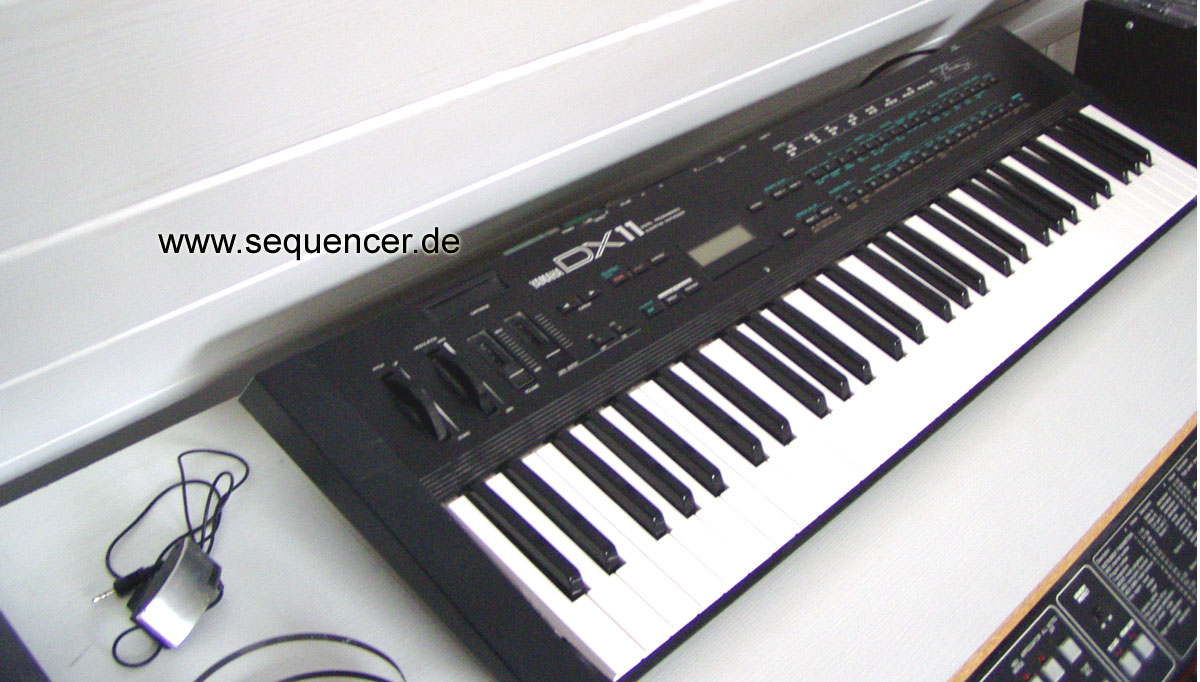
The yamaha dx11. This is one of the very first fm synthesizers, a technology that was outdated with the arrival of sample based keyboards. Originally I used this keyboard to try and program fm sounds with mediocre results. I played black metal back then which must have sounded terrible with that cheesy fm synth. It still has a home with me though, since it triggers midi just fine AND has pitch and modulation wheels.
 This is a picture of my number one guitar soon after I had gotten it. I'm a little turned off by the tacky abalone, but I have always loved the prs type look so this was a nice compromise for me. I was originally helping my brother decide on a guitar and after he turned this one down I played it for a few minutes and pretty much fell in love. It just has a great feeling neck and is a great middy sounding piece of wood. It has two humbuckers and a coil tap if you want to approach single coil (strat) tones.
You may notice that the pickups are different in the more recent picture of my guitar. After much trial and error I found an unlikely set that more or less works for me. It was unlikely because they are vintage (low) output and generally not marketed for the type of music I play. They are called the seymour duncan jazz set, and they work because they are clear. These stay tight and defined under gain but still manage to have a beautiful clean sound, which is lacking in high output pickups. Using coil tap and switching between neck and bridge I can make this guitar work for just about any type of music. It's sort of a jack of all trades, master of none guitar I feel.

This is a focusrite saffire pro 26 i/o firewire interface. Essentially, when synced with my computer it acts as my soundcard, providing high quality analog to digital conversion and sufficient inputs and outputs for most recording projects. Each of the eight inputs has its own (decentish) preamp and accepts either an xlr microphone cable or 1/4 inch plug. This is basically what gets sound into the computer.

Much of my equipment, including my saffire, are plugged into a furman power conditioner. The basic purpose of a power conditioner is to provide clean power to a sensitive piece of equipment that needs protection from electrical surging. It also sharply reduces noise caused by the electricity.

This is a line 6 podxt. It's a digital amp modeller and multi-fx unit for the guitar. Living in an apartment leaves you with pretty heavy noise restrictions, so normally I just deal with using this, despite the fact that it lacks the complexity in sound of the real thing. I can pull a fairly wide array of sounds from this in high enough fidelity that the guitars on my recordings often sound "pro." This convenience and the fact that I can record completely silently make it a necessity to any apartment dwelling recordist.
 These are probably my favorite part of my rig. Event Asp8 studio precision monitors. These speakers are incredibly rich sounding and at 250 watts each, very loud as well. Thankfully they come equipped with a 20db input pad, making volume manageable. These speakers are so rich that they're really just enjoyable to listen to, which isn't typical of a studio monitors. Thankfully, they still manage to be revealing- letting you hear reverb tails and deep layers that you often weren't aware existed. Mine are placed totally crappily because of lack of room, but I hope to remedy the situation soon.
My second set of monitors are simply yamaha hs50. These are yamaha's recent effort to replace the legendary ns10 studio monitor. These are my reality check speakers. Sometimes, despite the revealing nature of the Asp8's- their rich sound makes the source sound significantly better than it will on an ordinary speaker. These are very clear speakers, but not very good or pleasant to listen to. If your mix is sounding killer on these speakers, it is more likely to sound good on most other speakers as well. When I decided I wanted to buy monitors I discovered that there are two basic philosophies for studio monitors. Some believe that high quality speakers will reveal the truth of the sound because they allow you to hear more. Others contend that high quality speakers fool the listener and influence their mix negatively. Hence, low quality speakers are the truer monitor. I couldn't make up my mind, so I sold some stuff and got both :p
 Okay, so I didn't buy the macbook specifically to record with. I use it for school(now) and other stuff too. But, knowing that osx was preferable with a great deal of good software strongly incluenced by decision. I run logic on this thing currently and it has a great array of samples, instruments, and some beautiful sounding effects. I don't have much else to say about this, but as a collection these things represent the bare essentials of my rig.
 Not currently with me in Pullman is my halfstack. That's a custom made Mesa Boogie recto-verb head sitting ontop of a marshall 1960a 4x12 cab that I picked up second hand. Also present in this picture are an array of video games, a seriously beaten up snowboard, and a couple other amps I own. There's a fairly cheesy sounding marshall solid state close to the drums, and an old Sunn 0)) sonara head under the table. The sunn doesn't currently work, and the Mesa really destroys a lot of other amps anyway. It has a great clean channel with reverb and a boost function that gives a beautiful barely overdriven sound. The gain channel has three modes- raw, vintage, and modern that take it through various levels of gain. You can get a marshall esque classic rock sort of sound, a liquid smooth gain for leads, and full on over the top distortion with a huge bottom end on the modern channel. I generally like to use an overdrive pedal to trim some of the lows off actually because they can mud up the sound. The controls on Mesa amps work much differently than on many others. The eq controls a cascading gain that essentially filters through each pot. Minor eq adjustments can change the entire character of the amp, so if you tweak you can create brand new sounds on a normal basis, though with the same general flavor.
Every recording rig needs microphones and the sm57 is a tried an trusted workhorse. It is the most popular microphone in existence for micing a guitar cabinet and is also useful on snare, toms, vocals, and virtually anything you don't have a mic for. I have two.

This mic, is good for what it is: a cheap large diaphram condenser. It is an audio-technica at3035 that I picked up for 60 bucks. It works better than the sm57s on acoustic guitar, rich sounding vocals, and pretty much anything where detail is important. I have a much nicer microphone in Seattle, but this has worked as an okay Pullman substitute.

This looks pretty much identical to my other guitar. It's an ltd viper, which is a gibson sg rip-off. It's mahogany and came stock with EMG pickups, which work great for metal. I love the way sg body shapes hang on me, and it's really just nice to always have at least one guitar with EMGS. Frankly, I jumped on this guitar because I was able to buy it for 136 dollars. The pickups alone were worth 200, so I couldn't very well pass it up. I leave it in Seattle to play when I visit my family.
I think the saddest part about this little collection is that it's not even close to being finished. I have more music gear than there are pork products in a pig but there are microphones to buy, and upgrades to make yet... All this shit ends up playing a part in what my recordings sound like, and because I feel theres always room for self-improvement I don't see myself stopping this obsession any time soon. But for now, this little slice of paradise makes me quite happy when I have time to use it.

1 comment:
Amir,
Thanks for sharing your musical gear.
I just wonder: is "gear" a special name for musical accessories when they are part of a pattern of consumption? For example, a truck is just a truck, unless its a "rig," which denotes some working life of the truck, and not just trips to get dental floss. Blue-collar guys have "rigs," so I guess real musicians have "gear."
Back to dental floss, notice that "pig" becomes "pork" because we like French names for edibles as it sounds more classy (leftovers I suppose from France's brief rule of England).
I don't think you have to let Kellan just have this one. If you can't beat them, beat them with a guitar. For example, tell Kellan that that Pete Townsend loved to make "spam" out his Gibson Les Pauls'(a French name at least) -- smashing them into even smaller bits of "gear."
Post a Comment