We don't talk much do we? Or if we do, then what I really mean is we don't really hang out. Busy busy busy, no time to stop and smell the flowers. Jesus though, WHAT flowers?! This place is as barren as any I've ever seen, especially during winter. It's difficult for me to describe just how happy I am that the weather is finally heating back up.
I think I got my tourism out of the way the first two weeks or so that I was here. Oh Pullman, thou art a small and simple town. But the more I think about it, the more I realize how many unexplored nooks and crannies I've really left. I created my center of calculation and to hell with the rest- I've got too much work to worry about it. But is that really true? This time next year, when I'm getting ready to leave Pullman for good what will my memories be of? You seem well travelled, or at least better than me- do you also feel there's something missing here?
When I think of Pullman, I'm going to think of Kellan's living room. I'm going to think of the single beanbag chair in the corner, of cooking bacon in the same cheap beer we've been drinking all night, and finishing the night off right with a cigarrette under the Pull-moon. I'm going to think of my first experiences teaching, nervous at first and worried about my effectiveness. But those nerves will help me to recall the two times I convinced myself dancing at Valhalla was a good idea, because there's no such thing as shame on the dance floor. I will remember the countless hazy nights spent playing Britney's dance beat with my dear friends Nick and Nikkonnia, and I'll hear Nick screaming "Circle son! Circle!" I'll remember how many times Kellan destroyed me at settles online, and y'know I hope I'll call him for a rematch when I have that thought. What will you remember? Is this the stuff that makes Pullman, or have I got it all wrong? Am I yet to stumble upon the secrets of this God forsaken town?
Next year I'm bringing back my mountainboard. Let's face it already- there isn't much to do in Pullman. You can drink... and you can drink more if you find such banality depressing. I want to take my board and just drive around. I want to find some tucked away bit of wilderness with hills that are just the right size, and damnit if the thought of riding away my troubles isn't still enticing on some level. Maybe I'll wreck and really fuck myself up properly, and then I can gross you and everyone else out with bandaged gore and a smile on my face. At least that would help to break up some of the monotony.
What makes a place what it is? Is it the experiences we associate with it, the people we meet, or the place itself? Does it matter if our town is small and simple if the people are good? In a way, it's Pullman's crappiness that seems to pull everyone together. I mean, I'm pretty sure it'd be more of an experience to live in Paris but would it be this easy to make friends? Everyone here knows that Pullman itself is a little lame, but there's something to be said for bitching about that fact together, in unison. In this place, the meat of the culture involves a 30 bomb of busch light and a whole lot of stories about our lives in other places. Maybe we'll cook good food, maybe we'll buy better beer, but I swear to God the University is the only interesting thing about this place and I'll be damned if school becomes the only topic of discussion.
So if you don't have any better ideas, drop by sometime and drink a beer or two. Play some Britney, have a laugh- I'll even throw down and cook. The best thing Pullman has going for it is the company afterall.
Thursday, February 28, 2008

Placenessness
I was driving home to Seattle last thanksgiving- just crossing the mercer island bridge. On the radio I had the Nightingale song "to the end" playing. I cracked a smile at the lyrics, because they seemed fitting to my journey.
"coming here, is like coming back to life. I feel empowered, renewed. It's hard to believe it was so long ago, I called this place my home... I wish I could tame, this ghost in my heart. One part of me, will always remain here."
I could see the entire city lighting up the night, and I remember feeling like I wasn't quite home. It was familiar and strange at the same time- like remembering part of my own past that somehow I could no longer relate to.
But if Seattle is no longer my home, what place is? In Pullman, I talk a lot about Seattle and how much I miss it- because I don't totally feel at home here either. Pullman feels like a transition- this weird corner of the world with such little sense of identity that the university is the most distinct thing around. You can find a bar, or a Mcdonald's or a grocery store just about anywhere. Fastfood chains and places like IGA and Safeway are universal wherever they can be found. The problem is that this place is catered to college students- overpriced bars, crappy restaurants, and the ever present cougar mascot. And maybe it's good.
I don't feel any attachments to this place, so I'm not likely to stick around for any long period of time. It's the perfect transition from "home" into the real world, where it becomes one's responsibility to make a home. For now, I'm content to be placeless. I'm content with the ubiquity of Pullman's culture, and with the opportunity to meet other placeless people who have just left home. It will allow me, hopefully, to find a place that suits who I am- rather than letting who I am be defined by where I already live.
"coming here, is like coming back to life. I feel empowered, renewed. It's hard to believe it was so long ago, I called this place my home... I wish I could tame, this ghost in my heart. One part of me, will always remain here."
I could see the entire city lighting up the night, and I remember feeling like I wasn't quite home. It was familiar and strange at the same time- like remembering part of my own past that somehow I could no longer relate to.
But if Seattle is no longer my home, what place is? In Pullman, I talk a lot about Seattle and how much I miss it- because I don't totally feel at home here either. Pullman feels like a transition- this weird corner of the world with such little sense of identity that the university is the most distinct thing around. You can find a bar, or a Mcdonald's or a grocery store just about anywhere. Fastfood chains and places like IGA and Safeway are universal wherever they can be found. The problem is that this place is catered to college students- overpriced bars, crappy restaurants, and the ever present cougar mascot. And maybe it's good.
I don't feel any attachments to this place, so I'm not likely to stick around for any long period of time. It's the perfect transition from "home" into the real world, where it becomes one's responsibility to make a home. For now, I'm content to be placeless. I'm content with the ubiquity of Pullman's culture, and with the opportunity to meet other placeless people who have just left home. It will allow me, hopefully, to find a place that suits who I am- rather than letting who I am be defined by where I already live.
Tuesday, February 19, 2008
Hello, I'm Amir and I'm a Gear Hoe
After seeing Kellan's latest blog post I must admit that I felt fairly outdone at the collection game. Dividing one pig into a collection of various pork products is a fair bit more clever than anything I've been able to think of, but it was my idea to go to Minh's bakery for lunch that day so maybe that counts for something. The fact of the matter is, I'm not sure I like anything as much as Kellan likes bacon so it was difficult for me to find a way to make this post as fun for myself as it must have been for him. When I started to think about it however, it occurred to me that what Kellan must spend yearly on pork products I instead spent on guitar and recording equipment. I have been fairly obsessed for the past four or five years with the pursuit of producing high quality recordings with a home set-up. I have dumped more money into this hobby than anything I've ever become involved in, and sometimes I'm not even sure why.
I'm a member of two forums that are related to nothing other than guitar and recording respectively. At first, I thought the best course of action might be to excavate one of the forums I post on for guitar porn or maybe for soundclips posted by users for feedback. Both can be found in abundance, and in a very direct sense the bulletin is in itself a collection of information. Most of what I know about recording has come from reading these forums, and I have more than once posted pictures of my gear and clips of my playing the equipment. This tends to do one of two things: either cause a feeling of pride over one's own work and gear, or more typically create a feeling of lust for equipment that has produced better or more desirable results than what one already owns. This is typically referred to as GAS(Gear Acquisition Syndrome) and more often than not, I have it. Upper end equipment especially tends to be fetishized and sought after even when sound differences are negligible. Afterall, few things are as beautiful as a flame maple top on a Paul Reed Smith or Gibson Les Paul. This Fetishization has real results as can be seen clearly by the going price of any 1959 Gibson Les Paul(a quaint 250,000). These sorts of high priced instruments tend to increase in value over time and many buy them simply as an investment. Ironically, solid body guitars are constructed in such a way that arguably any resonant piece of wood with decent pickups will sound good through a nice amp regardless of where it was made and what name is on the headstock. I have compared my 400 dollar ltd viper (a Gibson sg knockoff) side by side with my friend's 3000+ dollar Les Paul through my amp and could NOT hear an audible difference, and many people hold this point of view. That said, one trip to www.seymourduncan.com will reveal a multitude of threads showing off brand new 3-4 thousand dollar guitars.
The same scenario doesn't hold true for either amplification or studio equipment, where more often than not you get what you pay for. In addition, the different sounds produced by different types of guitar can in general lead to GAS for all manner of equipment in the pursuit of desirable sounds. I believe my collection of audio equipment and musical instruments reflects my musical tastes, as well as the influence that these music forums have had on me. Let's see how:
 This is a low quality camera phone picture of my current workstation. It might be the best place to start since it is this equipment that I use most often. The workstation itself is a collection of a different sort, organizing under only one purpose. Let me break down what you see in this picture, right to left.
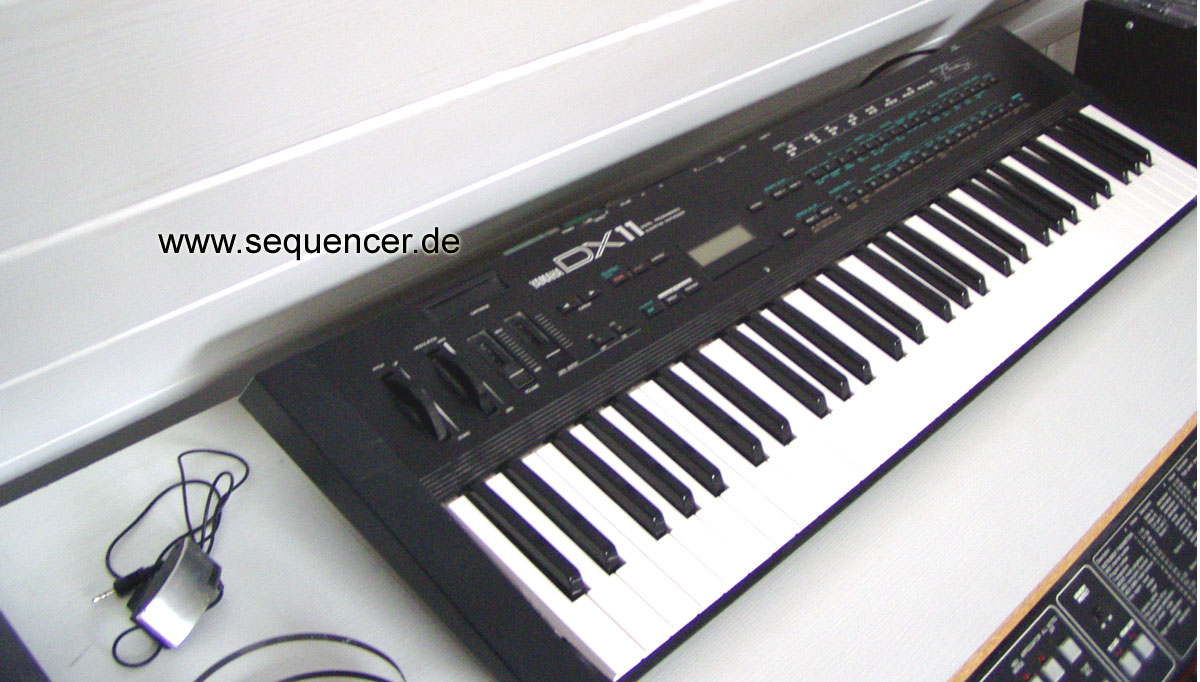
The yamaha dx11. This is one of the very first fm synthesizers, a technology that was outdated with the arrival of sample based keyboards. Originally I used this keyboard to try and program fm sounds with mediocre results. I played black metal back then which must have sounded terrible with that cheesy fm synth. It still has a home with me though, since it triggers midi just fine AND has pitch and modulation wheels.
 This is a picture of my number one guitar soon after I had gotten it. I'm a little turned off by the tacky abalone, but I have always loved the prs type look so this was a nice compromise for me. I was originally helping my brother decide on a guitar and after he turned this one down I played it for a few minutes and pretty much fell in love. It just has a great feeling neck and is a great middy sounding piece of wood. It has two humbuckers and a coil tap if you want to approach single coil (strat) tones.

You may notice that the pickups are different in the more recent picture of my guitar. After much trial and error I found an unlikely set that more or less works for me. It was unlikely because they are vintage (low) output and generally not marketed for the type of music I play. They are called the seymour duncan jazz set, and they work because they are clear. These stay tight and defined under gain but still manage to have a beautiful clean sound, which is lacking in high output pickups. Using coil tap and switching between neck and bridge I can make this guitar work for just about any type of music. It's sort of a jack of all trades, master of none guitar I feel.

This is a focusrite saffire pro 26 i/o firewire interface. Essentially, when synced with my computer it acts as my soundcard, providing high quality analog to digital conversion and sufficient inputs and outputs for most recording projects. Each of the eight inputs has its own (decentish) preamp and accepts either an xlr microphone cable or 1/4 inch plug. This is basically what gets sound into the computer.

Much of my equipment, including my saffire, are plugged into a furman power conditioner. The basic purpose of a power conditioner is to provide clean power to a sensitive piece of equipment that needs protection from electrical surging. It also sharply reduces noise caused by the electricity.

This is a line 6 podxt. It's a digital amp modeller and multi-fx unit for the guitar. Living in an apartment leaves you with pretty heavy noise restrictions, so normally I just deal with using this, despite the fact that it lacks the complexity in sound of the real thing. I can pull a fairly wide array of sounds from this in high enough fidelity that the guitars on my recordings often sound "pro." This convenience and the fact that I can record completely silently make it a necessity to any apartment dwelling recordist.
 These are probably my favorite part of my rig. Event Asp8 studio precision monitors. These speakers are incredibly rich sounding and at 250 watts each, very loud as well. Thankfully they come equipped with a 20db input pad, making volume manageable. These speakers are so rich that they're really just enjoyable to listen to, which isn't typical of a studio monitors. Thankfully, they still manage to be revealing- letting you hear reverb tails and deep layers that you often weren't aware existed. Mine are placed totally crappily because of lack of room, but I hope to remedy the situation soon.

My second set of monitors are simply yamaha hs50. These are yamaha's recent effort to replace the legendary ns10 studio monitor. These are my reality check speakers. Sometimes, despite the revealing nature of the Asp8's- their rich sound makes the source sound significantly better than it will on an ordinary speaker. These are very clear speakers, but not very good or pleasant to listen to. If your mix is sounding killer on these speakers, it is more likely to sound good on most other speakers as well. When I decided I wanted to buy monitors I discovered that there are two basic philosophies for studio monitors. Some believe that high quality speakers will reveal the truth of the sound because they allow you to hear more. Others contend that high quality speakers fool the listener and influence their mix negatively. Hence, low quality speakers are the truer monitor. I couldn't make up my mind, so I sold some stuff and got both :p
 Okay, so I didn't buy the macbook specifically to record with. I use it for school(now) and other stuff too. But, knowing that osx was preferable with a great deal of good software strongly incluenced by decision. I run logic on this thing currently and it has a great array of samples, instruments, and some beautiful sounding effects. I don't have much else to say about this, but as a collection these things represent the bare essentials of my rig.
 Not currently with me in Pullman is my halfstack. That's a custom made Mesa Boogie recto-verb head sitting ontop of a marshall 1960a 4x12 cab that I picked up second hand. Also present in this picture are an array of video games, a seriously beaten up snowboard, and a couple other amps I own. There's a fairly cheesy sounding marshall solid state close to the drums, and an old Sunn 0)) sonara head under the table. The sunn doesn't currently work, and the Mesa really destroys a lot of other amps anyway. It has a great clean channel with reverb and a boost function that gives a beautiful barely overdriven sound. The gain channel has three modes- raw, vintage, and modern that take it through various levels of gain. You can get a marshall esque classic rock sort of sound, a liquid smooth gain for leads, and full on over the top distortion with a huge bottom end on the modern channel. I generally like to use an overdrive pedal to trim some of the lows off actually because they can mud up the sound. The controls on Mesa amps work much differently than on many others. The eq controls a cascading gain that essentially filters through each pot. Minor eq adjustments can change the entire character of the amp, so if you tweak you can create brand new sounds on a normal basis, though with the same general flavor.
 This picture is not my bass, but they look almost identical. It's a long scale bass which helps give bite and clarity though generally a mellow sound due to the single coil style pickups. All I gotta say is: gotta have a bass.

Every recording rig needs microphones and the sm57 is a tried an trusted workhorse. It is the most popular microphone in existence for micing a guitar cabinet and is also useful on snare, toms, vocals, and virtually anything you don't have a mic for. I have two.

This mic, is good for what it is: a cheap large diaphram condenser. It is an audio-technica at3035 that I picked up for 60 bucks. It works better than the sm57s on acoustic guitar, rich sounding vocals, and pretty much anything where detail is important. I have a much nicer microphone in Seattle, but this has worked as an okay Pullman substitute.

This looks pretty much identical to my other guitar. It's an ltd viper, which is a gibson sg rip-off. It's mahogany and came stock with EMG pickups, which work great for metal. I love the way sg body shapes hang on me, and it's really just nice to always have at least one guitar with EMGS. Frankly, I jumped on this guitar because I was able to buy it for 136 dollars. The pickups alone were worth 200, so I couldn't very well pass it up. I leave it in Seattle to play when I visit my family.
I think the saddest part about this little collection is that it's not even close to being finished. I have more music gear than there are pork products in a pig but there are microphones to buy, and upgrades to make yet... All this shit ends up playing a part in what my recordings sound like, and because I feel theres always room for self-improvement I don't see myself stopping this obsession any time soon. But for now, this little slice of paradise makes me quite happy when I have time to use it.
I'm a member of two forums that are related to nothing other than guitar and recording respectively. At first, I thought the best course of action might be to excavate one of the forums I post on for guitar porn or maybe for soundclips posted by users for feedback. Both can be found in abundance, and in a very direct sense the bulletin is in itself a collection of information. Most of what I know about recording has come from reading these forums, and I have more than once posted pictures of my gear and clips of my playing the equipment. This tends to do one of two things: either cause a feeling of pride over one's own work and gear, or more typically create a feeling of lust for equipment that has produced better or more desirable results than what one already owns. This is typically referred to as GAS(Gear Acquisition Syndrome) and more often than not, I have it. Upper end equipment especially tends to be fetishized and sought after even when sound differences are negligible. Afterall, few things are as beautiful as a flame maple top on a Paul Reed Smith or Gibson Les Paul. This Fetishization has real results as can be seen clearly by the going price of any 1959 Gibson Les Paul(a quaint 250,000). These sorts of high priced instruments tend to increase in value over time and many buy them simply as an investment. Ironically, solid body guitars are constructed in such a way that arguably any resonant piece of wood with decent pickups will sound good through a nice amp regardless of where it was made and what name is on the headstock. I have compared my 400 dollar ltd viper (a Gibson sg knockoff) side by side with my friend's 3000+ dollar Les Paul through my amp and could NOT hear an audible difference, and many people hold this point of view. That said, one trip to www.seymourduncan.com will reveal a multitude of threads showing off brand new 3-4 thousand dollar guitars.
The same scenario doesn't hold true for either amplification or studio equipment, where more often than not you get what you pay for. In addition, the different sounds produced by different types of guitar can in general lead to GAS for all manner of equipment in the pursuit of desirable sounds. I believe my collection of audio equipment and musical instruments reflects my musical tastes, as well as the influence that these music forums have had on me. Let's see how:
 This is a low quality camera phone picture of my current workstation. It might be the best place to start since it is this equipment that I use most often. The workstation itself is a collection of a different sort, organizing under only one purpose. Let me break down what you see in this picture, right to left.
The yamaha dx11. This is one of the very first fm synthesizers, a technology that was outdated with the arrival of sample based keyboards. Originally I used this keyboard to try and program fm sounds with mediocre results. I played black metal back then which must have sounded terrible with that cheesy fm synth. It still has a home with me though, since it triggers midi just fine AND has pitch and modulation wheels.
This is a picture of my number one guitar soon after I had gotten it. I'm a little turned off by the tacky abalone, but I have always loved the prs type look so this was a nice compromise for me. I was originally helping my brother decide on a guitar and after he turned this one down I played it for a few minutes and pretty much fell in love. It just has a great feeling neck and is a great middy sounding piece of wood. It has two humbuckers and a coil tap if you want to approach single coil (strat) tones.
You may notice that the pickups are different in the more recent picture of my guitar. After much trial and error I found an unlikely set that more or less works for me. It was unlikely because they are vintage (low) output and generally not marketed for the type of music I play. They are called the seymour duncan jazz set, and they work because they are clear. These stay tight and defined under gain but still manage to have a beautiful clean sound, which is lacking in high output pickups. Using coil tap and switching between neck and bridge I can make this guitar work for just about any type of music. It's sort of a jack of all trades, master of none guitar I feel.
This is a focusrite saffire pro 26 i/o firewire interface. Essentially, when synced with my computer it acts as my soundcard, providing high quality analog to digital conversion and sufficient inputs and outputs for most recording projects. Each of the eight inputs has its own (decentish) preamp and accepts either an xlr microphone cable or 1/4 inch plug. This is basically what gets sound into the computer.
Much of my equipment, including my saffire, are plugged into a furman power conditioner. The basic purpose of a power conditioner is to provide clean power to a sensitive piece of equipment that needs protection from electrical surging. It also sharply reduces noise caused by the electricity.
This is a line 6 podxt. It's a digital amp modeller and multi-fx unit for the guitar. Living in an apartment leaves you with pretty heavy noise restrictions, so normally I just deal with using this, despite the fact that it lacks the complexity in sound of the real thing. I can pull a fairly wide array of sounds from this in high enough fidelity that the guitars on my recordings often sound "pro." This convenience and the fact that I can record completely silently make it a necessity to any apartment dwelling recordist.
These are probably my favorite part of my rig. Event Asp8 studio precision monitors. These speakers are incredibly rich sounding and at 250 watts each, very loud as well. Thankfully they come equipped with a 20db input pad, making volume manageable. These speakers are so rich that they're really just enjoyable to listen to, which isn't typical of a studio monitors. Thankfully, they still manage to be revealing- letting you hear reverb tails and deep layers that you often weren't aware existed. Mine are placed totally crappily because of lack of room, but I hope to remedy the situation soon.My second set of monitors are simply yamaha hs50. These are yamaha's recent effort to replace the legendary ns10 studio monitor. These are my reality check speakers. Sometimes, despite the revealing nature of the Asp8's- their rich sound makes the source sound significantly better than it will on an ordinary speaker. These are very clear speakers, but not very good or pleasant to listen to. If your mix is sounding killer on these speakers, it is more likely to sound good on most other speakers as well. When I decided I wanted to buy monitors I discovered that there are two basic philosophies for studio monitors. Some believe that high quality speakers will reveal the truth of the sound because they allow you to hear more. Others contend that high quality speakers fool the listener and influence their mix negatively. Hence, low quality speakers are the truer monitor. I couldn't make up my mind, so I sold some stuff and got both :p
Okay, so I didn't buy the macbook specifically to record with. I use it for school(now) and other stuff too. But, knowing that osx was preferable with a great deal of good software strongly incluenced by decision. I run logic on this thing currently and it has a great array of samples, instruments, and some beautiful sounding effects. I don't have much else to say about this, but as a collection these things represent the bare essentials of my rig. Not currently with me in Pullman is my halfstack. That's a custom made Mesa Boogie recto-verb head sitting ontop of a marshall 1960a 4x12 cab that I picked up second hand. Also present in this picture are an array of video games, a seriously beaten up snowboard, and a couple other amps I own. There's a fairly cheesy sounding marshall solid state close to the drums, and an old Sunn 0)) sonara head under the table. The sunn doesn't currently work, and the Mesa really destroys a lot of other amps anyway. It has a great clean channel with reverb and a boost function that gives a beautiful barely overdriven sound. The gain channel has three modes- raw, vintage, and modern that take it through various levels of gain. You can get a marshall esque classic rock sort of sound, a liquid smooth gain for leads, and full on over the top distortion with a huge bottom end on the modern channel. I generally like to use an overdrive pedal to trim some of the lows off actually because they can mud up the sound. The controls on Mesa amps work much differently than on many others. The eq controls a cascading gain that essentially filters through each pot. Minor eq adjustments can change the entire character of the amp, so if you tweak you can create brand new sounds on a normal basis, though with the same general flavor.
Every recording rig needs microphones and the sm57 is a tried an trusted workhorse. It is the most popular microphone in existence for micing a guitar cabinet and is also useful on snare, toms, vocals, and virtually anything you don't have a mic for. I have two.
This mic, is good for what it is: a cheap large diaphram condenser. It is an audio-technica at3035 that I picked up for 60 bucks. It works better than the sm57s on acoustic guitar, rich sounding vocals, and pretty much anything where detail is important. I have a much nicer microphone in Seattle, but this has worked as an okay Pullman substitute.
This looks pretty much identical to my other guitar. It's an ltd viper, which is a gibson sg rip-off. It's mahogany and came stock with EMG pickups, which work great for metal. I love the way sg body shapes hang on me, and it's really just nice to always have at least one guitar with EMGS. Frankly, I jumped on this guitar because I was able to buy it for 136 dollars. The pickups alone were worth 200, so I couldn't very well pass it up. I leave it in Seattle to play when I visit my family.
I think the saddest part about this little collection is that it's not even close to being finished. I have more music gear than there are pork products in a pig but there are microphones to buy, and upgrades to make yet... All this shit ends up playing a part in what my recordings sound like, and because I feel theres always room for self-improvement I don't see myself stopping this obsession any time soon. But for now, this little slice of paradise makes me quite happy when I have time to use it.
Thursday, February 14, 2008
Indian Adventure
March 25th, 1799: Next week I set sail aboard "The Whale," en route to India with none other than the famous Captain Woodcock at the helm. I've decided to stay the night at the black pot inn, but I'm told my bedfellow may not return until late tonight. I am greatly looking forward to this venture, and shall certainly learn much about the Indies during my visit.
March 26th, 1799: I woke to the sound of a belligerent and very drunk Irishman cursing at me in surprise. Unaware that we were to be bedfellows, he let the weight of the alcohol drag him to the bed with a mighty thud that caused our heads to knock with much force.
Sometimes however the oddest situations can make the greatest friendships, and we spent the remainder of the night smoking his corncob pipe and getting to know one another. He introduced himself as Kellan, an Irish colonialist with a penchant for adventure. I took much delight in his drunkenness and asked whether he wouldn't accompany me on my venture to India. To my delight he agreed and we left later that week with the wind at our backs.
April 2nd, 1799: Aboard the ship there was talk of Unicorns found both in America and Greenland. Kellan and I have agreed that the probability of finding a new breed of Indian unicorn is not unlikely and we have resolved to hunt for one upon landing.
April 5th, 1799: We've arrived in India!
 Our Journey began in Surat where the natives gave us "fauful" - an Indian nut good for strengthening the teeth that will leave a stain of red upon the lips. After sitting for a while and smoking Kellan's corncob pipe, we determined that it would be necessary to acquire a camel for the trip inland.
  While I set about doing this Kellan began to sample an Arab alcohol called "arak" made from figs. Thankfully I was able to find a camel on my own and before we knew it we were on our way.
April 9, 1799: After two days of travel through the desert we stopped at a temple so that Kellan could recover from the sun-burn given by the hot sun. Here we were served rice, butter, milk, and a variety of pickled fruits. We learned that the milk and butter were products of a goat, since the locals hold cattle to be of extreme importance and possibly divine. The people call them "the prop of the world." They also hate Sodomy which according to them is practiced by the Mohetans regularly. They marry one wife and never divorce.
 April 14, 1799: After almost a week in the desert we arrived in a place named Mangalor. We were greated by a formidable feast of rice seasoned with Saffron and red spices, figs, almond milk and
  to our delight the meat of a Goat. This was the first time we had meat since beginning our venture, and I could feel my body regaining vital energy. We ate strictly with our hands, but it felt very natural and the food was delicious. Yum!

April 15th, 1799: Today began with news from the locals that the Rajah wished to meet with us. We travelled to his temple and we delighted at what an exotic and wonderful savage he truly was. Kellan asked if he might want to accompany us on our Journey back to Britain but was flatly refused.
Last entry: I was woke in the night by a group of local Indian gentiles. They stole Kellan's gun, some of his gunpowder, and half his British cigarettes. They used the gun to ensure I did not try to escape and told me that because I resembled the Mohetans I was no longer welcome. Being a kind people, they gave me a camel and I rode it into the sunset.
March 26th, 1799: I woke to the sound of a belligerent and very drunk Irishman cursing at me in surprise. Unaware that we were to be bedfellows, he let the weight of the alcohol drag him to the bed with a mighty thud that caused our heads to knock with much force.

Sometimes however the oddest situations can make the greatest friendships, and we spent the remainder of the night smoking his corncob pipe and getting to know one another. He introduced himself as Kellan, an Irish colonialist with a penchant for adventure. I took much delight in his drunkenness and asked whether he wouldn't accompany me on my venture to India. To my delight he agreed and we left later that week with the wind at our backs.
April 2nd, 1799: Aboard the ship there was talk of Unicorns found both in America and Greenland. Kellan and I have agreed that the probability of finding a new breed of Indian unicorn is not unlikely and we have resolved to hunt for one upon landing.
April 5th, 1799: We've arrived in India!
 Our Journey began in Surat where the natives gave us "fauful" - an Indian nut good for strengthening the teeth that will leave a stain of red upon the lips. After sitting for a while and smoking Kellan's corncob pipe, we determined that it would be necessary to acquire a camel for the trip inland.
  While I set about doing this Kellan began to sample an Arab alcohol called "arak" made from figs. Thankfully I was able to find a camel on my own and before we knew it we were on our way.
April 9, 1799: After two days of travel through the desert we stopped at a temple so that Kellan could recover from the sun-burn given by the hot sun. Here we were served rice, butter, milk, and a variety of pickled fruits. We learned that the milk and butter were products of a goat, since the locals hold cattle to be of extreme importance and possibly divine. The people call them "the prop of the world." They also hate Sodomy which according to them is practiced by the Mohetans regularly. They marry one wife and never divorce.
 April 14, 1799: After almost a week in the desert we arrived in a place named Mangalor. We were greated by a formidable feast of rice seasoned with Saffron and red spices, figs, almond milk and
  to our delight the meat of a Goat. This was the first time we had meat since beginning our venture, and I could feel my body regaining vital energy. We ate strictly with our hands, but it felt very natural and the food was delicious. Yum!
April 15th, 1799: Today began with news from the locals
 that the Rajah wished to meet with us. We travelled to his temple and we delighted at what an exotic and wonderful savage he truly was. Kellan asked if he might want to accompany us on our Journey back to Britain but was flatly refused.
Last entry: I was woke in the night by a group of local Indian gentiles. They stole Kellan's gun, some of his gunpowder, and half his British cigarettes. They used the gun to ensure I did not try to escape and told me that because I resembled the Mohetans I was no longer welcome. Being a kind people, they gave me a camel and I rode it into the sunset.
Sunday, February 10, 2008
It's difficult to imagine a trip with no photos
It's difficult to imagine a trip with no photos, because memories lose clarity far sooner than pictures.
Let's talk about collections. If the collection is given its context and meaning through narrative, it is also the physical artifact of experiential memory for the collector. Specifically, it is that which illuminates memory with a physical trace of the past experience. The photo album then, is the ultimate collection of past recorded experiences with a meaning that is contingent on the memory that they spark in the spectator. The memory may be grounded to the photo where it would otherwise float and become exaggerated. The point remains however, that if one takes a trip without photos there are no artifacts. Remembered experiences remain but their shape and image may no longer be grounded by the real.
What then remains of the trip with no photographs? An ungrounded form of memory prone to slippage through boundaries of meaning. In other words, there is no collection to give context through narrative but the narrative remains and loses focus over time.
If we are to apply the photograph analogy to Banks or to other early science travel writers, the most pertinent question might be: What happens to the narrative after prolonged absence from the collection? If I were to dig out an old photo album now and try to describe what was happening in each picture, it would be likely that in the excitement of narrating I could largely exaggerate events that actually happened, or that I could actually imagine experiences in order to give context to certain photos.
I remember flying to Arizona with the Academy of Finance at my high school. I remember spending two days in seminars at a hotel. I remember travelling to the grand canyon. I remember renting a van to do it, and I remember the people that were with me. Beyond this information, any narrative attached to that trip could derive a great deal of information from my mood and from which emotionally and socially tied responses triggered by the event I choose to share. For example:
I remember that two of the girls with me on the trip made me go swimming with them the first night. If I were talking to Kellan, I might say something like "Oh dude they were totally into me," and let my imagination take over. Were I to recount the same experience to my own mother my memory might prove slightly different. However neither memory is really more correct than the other because the truth of the matter is I have no idea if those two girls were into me or not, and no way of knowing.
Here's where it gets crazy- if I did see a picture from that trip (and I do think some exist) I would realize that back then I was overweight, nerdier than I am now, and had bad style. That's just the way pictures from that era resonate with me. From here, a different version of the same story could arise. "Oh dude, they probably felt sorry for me cuz I was the only guy on the trip..."
The point remains- narratives are never grounded completely, but physical artifacts and collections can at least place limits narration (if only to influence them in other ways). Motivation and context are hard to remember, and experiential intricacies perhaps just as hard. What remains is the abstract physical action- the action interpreted abstractly. I went to Arizona. I went to the grand canyon. I went swimming the first night.
Let's talk about collections. If the collection is given its context and meaning through narrative, it is also the physical artifact of experiential memory for the collector. Specifically, it is that which illuminates memory with a physical trace of the past experience. The photo album then, is the ultimate collection of past recorded experiences with a meaning that is contingent on the memory that they spark in the spectator. The memory may be grounded to the photo where it would otherwise float and become exaggerated. The point remains however, that if one takes a trip without photos there are no artifacts. Remembered experiences remain but their shape and image may no longer be grounded by the real.
What then remains of the trip with no photographs? An ungrounded form of memory prone to slippage through boundaries of meaning. In other words, there is no collection to give context through narrative but the narrative remains and loses focus over time.
If we are to apply the photograph analogy to Banks or to other early science travel writers, the most pertinent question might be: What happens to the narrative after prolonged absence from the collection? If I were to dig out an old photo album now and try to describe what was happening in each picture, it would be likely that in the excitement of narrating I could largely exaggerate events that actually happened, or that I could actually imagine experiences in order to give context to certain photos.
I remember flying to Arizona with the Academy of Finance at my high school. I remember spending two days in seminars at a hotel. I remember travelling to the grand canyon. I remember renting a van to do it, and I remember the people that were with me. Beyond this information, any narrative attached to that trip could derive a great deal of information from my mood and from which emotionally and socially tied responses triggered by the event I choose to share. For example:
I remember that two of the girls with me on the trip made me go swimming with them the first night. If I were talking to Kellan, I might say something like "Oh dude they were totally into me," and let my imagination take over. Were I to recount the same experience to my own mother my memory might prove slightly different. However neither memory is really more correct than the other because the truth of the matter is I have no idea if those two girls were into me or not, and no way of knowing.
Here's where it gets crazy- if I did see a picture from that trip (and I do think some exist) I would realize that back then I was overweight, nerdier than I am now, and had bad style. That's just the way pictures from that era resonate with me. From here, a different version of the same story could arise. "Oh dude, they probably felt sorry for me cuz I was the only guy on the trip..."
The point remains- narratives are never grounded completely, but physical artifacts and collections can at least place limits narration (if only to influence them in other ways). Motivation and context are hard to remember, and experiential intricacies perhaps just as hard. What remains is the abstract physical action- the action interpreted abstractly. I went to Arizona. I went to the grand canyon. I went swimming the first night.
Subscribe to:
Posts (Atom)